Top AI Trends to Watch Before the End of 2026


Top AI Trends to Watch Before the End of 2026
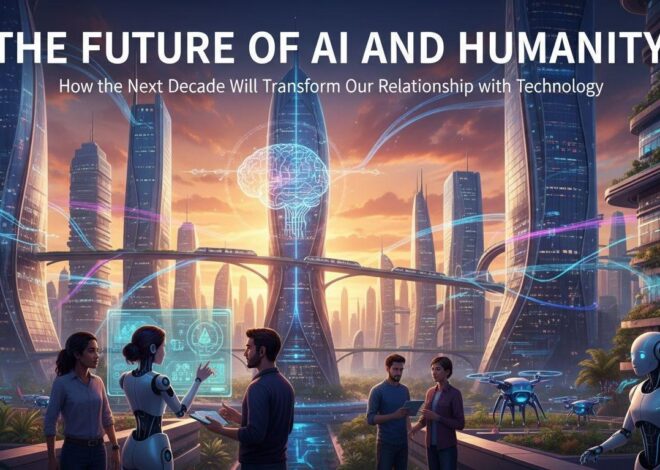
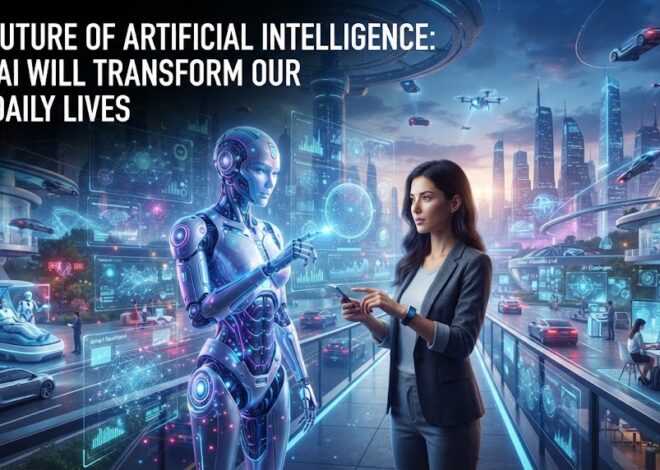
Artificial intelligence is evolving faster than ever, and the second half of 2026 is expected to bring significant breakthroughs across industries. From more capable reasoning models to autonomous AI agents and intelligent robotics, AI is shifting from simply generating content to actively solving complex problems and assisting people in everyday work.
Here are the most important AI trends to watch before the end of 2026.
1. Advanced Reasoning Models
The latest generation of AI models is moving beyond text prediction toward genuine reasoning capabilities.
Modern reasoning models can:
- Solve multi-step problems
- Analyze large datasets
- Write and debug complex code
- Explain decisions logically
- Perform scientific and mathematical reasoning
- Handle long-context conversations
Why It Matters
Businesses are beginning to rely on reasoning AI for:
- Financial analysis
- Medical research
- Software engineering
- Legal document review
- Business strategy
Instead of acting like chatbots, reasoning models increasingly function as digital experts that can break problems into logical steps before producing answers.
2. AI Agents Becoming Everyday Assistants
AI agents represent one of the biggest technology shifts of 2026.
Unlike traditional AI chatbots, AI agents can:
- Plan tasks
- Make decisions
- Use software tools
- Search databases
- Schedule meetings
- Automate repetitive work
- Complete multi-step workflows
Examples
Business AI agents can:
- Read emails
- Create reports
- Update CRM systems
- Generate presentations
- Analyze sales data
- Send customer follow-ups
Developer AI agents can:
- Build applications
- Test software
- Find bugs
- Deploy code
- Monitor servers
The future is shifting from asking AI one question at a time to assigning it complete tasks.
3. Robotics Powered by AI


AI is dramatically improving robotics through better perception, planning, and real-time decision-making.
Key areas of growth include:
Manufacturing
Robots now perform:
- Quality inspection
- Assembly
- Packaging
- Predictive maintenance
Healthcare
Hospitals are deploying robots for:
- Medication delivery
- Patient assistance
- Surgical support
- Hospital logistics
Warehouses
Modern warehouses increasingly use AI-powered robots to:
- Sort inventory
- Pick products
- Optimize storage
- Speed deliveries
Consumer Robotics
Home robots are becoming more capable of:
- Cleaning
- Security monitoring
- Smart home control
- Elder care assistance
The combination of generative AI and robotics is making machines more adaptable than ever.
4. Edge AI Goes Mainstream
Instead of sending every request to the cloud, more AI is running directly on devices.
Examples include:
- Smartphones
- Laptops
- Smart cameras
- Cars
- Drones
- Medical devices
- Industrial sensors
Advantages
Edge AI offers:
- Faster responses
- Better privacy
- Lower internet dependence
- Reduced cloud costs
- Improved reliability
This trend is especially important for industries where real-time decisions are critical.
5. Enterprise AI Adoption Accelerates
Organizations are moving beyond AI experiments to company-wide deployments.
Major enterprise use cases include:
Customer Support
- Intelligent chatbots
- Voice assistants
- Automated ticket routing
Finance
- Fraud detection
- Risk analysis
- Financial forecasting
Human Resources
- Resume screening
- Interview scheduling
- Employee knowledge assistants
Marketing
- Personalized campaigns
- Content generation
- Customer segmentation
Operations
- Supply chain optimization
- Inventory prediction
- Process automation
Enterprise AI is becoming a core part of business strategy rather than an optional innovation.
6. Responsible AI Takes Center Stage
As AI becomes more powerful, organizations are placing greater emphasis on responsible development and deployment.
Key priorities include:
- Transparency
- Explainability
- Fairness
- Bias reduction
- Privacy protection
- Human oversight
- Regulatory compliance
Companies increasingly recognize that trust is as important as capability when deploying AI systems.
7. Multimodal AI Improves User Experiences


Modern AI systems increasingly understand and generate multiple forms of content simultaneously.
They can combine:
- Text
- Images
- Audio
- Video
- Documents
- Code
This enables richer applications such as:
- Video creation from text
- Image understanding with natural language
- Voice-controlled assistants
- AI-powered education
- Intelligent design tools
Multimodal AI reduces the need for separate specialized tools.
8. AI for Software Development
AI coding assistants continue to improve productivity.
Developers are using AI to:
- Generate code
- Review pull requests
- Write documentation
- Detect bugs
- Create tests
- Explain legacy code
- Refactor applications
AI is becoming a collaborative partner throughout the software development lifecycle.
9. Personalized AI for Every User
AI systems are becoming more personalized by learning user preferences, work styles, and recurring tasks.
Examples include:
- Personalized learning platforms
- Customized productivity assistants
- Tailored recommendations
- Individual writing styles
- Adaptive business dashboards
The goal is to provide more relevant and efficient assistance without requiring repeated instructions.
10. AI Security and Privacy Gain Importance
As AI adoption grows, so do concerns about security.
Key focus areas include:
- Protecting sensitive data
- Securing AI models
- Preventing prompt injection attacks
- Detecting AI-generated fraud
- Monitoring model behavior
- Ensuring compliance with privacy regulations
Organizations are investing in AI governance alongside AI innovation.
Industries Most Impacted by These Trends
- Healthcare
- Education
- Finance
- Manufacturing
- Retail
- Transportation
- Software Development
- Customer Service
- Media and Entertainment
- Scientific Research
Businesses in these sectors are likely to see significant productivity gains as AI capabilities continue to expand.
Key Takeaways
Before the end of 2026, AI is expected to become more capable, autonomous, and deeply integrated into everyday life. Reasoning models are improving complex problem-solving, AI agents are automating multi-step workflows, robotics is becoming more intelligent, and Edge AI is enabling faster, privacy-focused experiences. At the same time, enterprise adoption is accelerating while responsible AI practices help ensure that these powerful technologies are deployed safely and ethically.
Organizations and individuals who invest in AI literacy, workflow automation, and responsible implementation will be better positioned to benefit from the next phase of AI innovation.
Suggested SEO Tags: AI Trends 2026, Reasoning AI, AI Agents, Enterprise AI, Edge AI, Robotics, Responsible AI, Multimodal AI, Artificial Intelligence, Future of AI, AI Automation, AI Technology, AI Innovation, Business AI, AI Predictions 2026