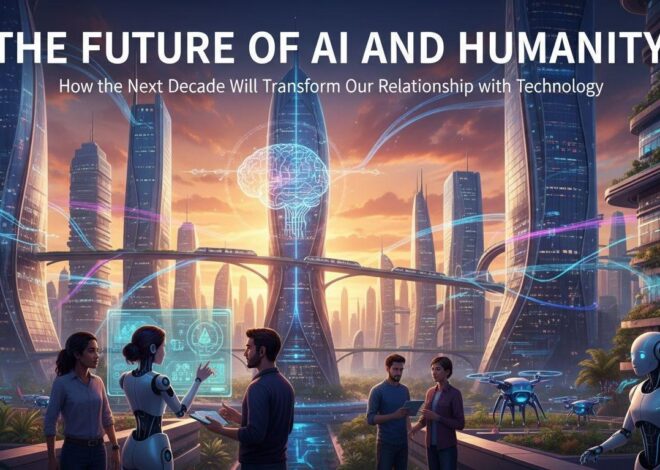
AI in Healthcare: Revolutionizing Diagnosis and Treatment
Artificial Intelligence (AI) is rapidly transforming the healthcare industry, making medical processes faster, more accurate, and more accessible. From early disease detection to personalized treatment plans, AI is reshaping how doctors diagnose and treat patients around the world. As technology continues to evolve, AI is becoming an essential tool in modern medicine rather than just an experimental innovation.
1. AI-Powered Medical Diagnosis
One of the most significant contributions of AI in healthcare is in medical diagnosis. AI systems can analyze vast amounts of medical data—such as X-rays, MRI scans, CT scans, and blood reports—within seconds.
Machine learning algorithms are trained to detect patterns that may be invisible to the human eye. For example, AI can identify early signs of diseases like cancer, diabetes, and heart conditions with high accuracy. This early detection often leads to better treatment outcomes and higher survival rates.
2. Personalized Treatment Plans
Every patient is unique, and AI helps doctors design personalized treatment strategies. By analyzing a patient’s genetic data, lifestyle, medical history, and real-time health information, AI systems can recommend the most effective treatments.
This approach, known as precision medicine, reduces trial-and-error treatments and minimizes side effects. Patients receive care that is specifically tailored to their individual needs, improving recovery rates and overall health outcomes.
3. AI in Drug Discovery and Development
Developing new medicines traditionally takes years and costs billions of dollars. AI is changing this by speeding up the drug discovery process.
AI algorithms can analyze biological data and simulate how different compounds will interact with diseases. This helps researchers identify potential drug candidates much faster than traditional methods. As a result, life-saving drugs can reach patients more quickly and at a lower cost.
4. Virtual Health Assistants and Remote Care
AI-powered chatbots and virtual assistants are now being used to provide 24/7 healthcare support. These tools can answer medical questions, schedule appointments, and even offer preliminary diagnoses based on symptoms.
In addition, AI supports telemedicine by enabling remote patient monitoring. Wearable devices collect health data such as heart rate and blood pressure, which AI systems analyze in real time to alert doctors about potential health risks.
5. Challenges and Ethical Considerations
Despite its benefits, AI in healthcare also presents challenges. Data privacy is a major concern, as sensitive patient information must be protected. There is also the risk of algorithm bias, where AI systems may produce inaccurate results due to incomplete or biased training data.
Moreover, AI should support doctors, not replace them. Human judgment, empathy, and ethical decision-making remain essential in patient care.
Conclusion
AI is revolutionizing healthcare by improving diagnosis accuracy, personalizing treatment, and accelerating drug development. While challenges remain, the future of medicine is clearly intertwined with artificial intelligence. As technology continues to advance, AI will play an even greater role in saving lives and improving global healthcare systems.